Showing posts with label values. Show all posts

Tuesday, 5 January 2010

On moral obligation

One complaint levelled against entirely naturalistic worldviews is this:
What is the basis of morality? By what right can you expect anyone to follow moral rules, if there is no transcendent reality to ground them in?
I have had a very engaging discussion of this (and related issues) with Ken Brown and other commenters on his blog, and have posted some of my own thoughts here. Ken and colleagues are coming specifically from a Christian perspective. (I have yet to see them give a satisfactory justification for how a "transcendent reality" solves the problem - but that's a topic for another time. As is the whole burden of actually demonstrating that such a reality exists - which would seem to be a prerequisite if one is to pin one's entire moral philosophy on it.)

I thought I might pick out the key points of my answer here.

First, I come back to a very pragmatic position: most of the key elements of morality (love, fairness, honesty, nonviolence, etc) are built into most humans. (This fact has very interesting naturalistic explanations in the context of evolution as a social species, but that too, is a topic for another time.) So we have a useful basis for discussing moral issues without either an esoteric knowledge of the philosophical underpinnings of morality or a belief in a transcendent basis for moral claims. This is the basis of secular government: we build our society on the foundations we all share.

Second and more important, how I can derive another's obligation from my "relativist" moral stance? Very cautiously and humbly. For most cases where someone says "there ought to be a law", there probably oughtn't. Law - the formal, coercive expression of our shared moral principles - is a blunt instrument that should not be used to solve all problems.

But even aside from the law, I do expect people to act morally, and I reserve the right to hold them accountable when they don't. How do I do this? What gives me, a relativist with no ultimate explanation for right and wrong, the right to project my moral judgments on others? Why should someone else do the right thing rather than some other thing? The most honest answer I can give is very simple:
People should do the right thing, because it's the right thing to do.
I know that's not very philosophical or subtle. But, so long as we all share a basic sense of right and wrong, it's sufficient for the vast majority of life's decisions.

And for those issues where we don't instinctively agree on the right answer - abortion, euthanasia, drug control, etc - pretending that a hypothetical transcendent realm holds the answer does not seem to solve things. It may give some people a sense of self-righteousness to bolster their support of one position, but it is useless in seeking a practical solution or persuading people who believe in a different hypothetical set of transcendent moral truths (or folks like me who doubt such a set exists at all). In these cases, we have to fall back on the nasty, brutish, fallible strategy of using rhetoric and reason to pursue the best solution and persuade each other of it.

Photo credits:

Justice statue on Old Bailey, London: from Wikipedia, shared by user Erasoft24 under Creative Commons Attribution licence 2.5.

Friday, 1 January 2010

Foundation Beyond Belief

I am delighted to announce the launch of a new humanist-driven charity initiative, the Foundation Beyond Belief. Go to the site itself for full details, and to sign up.

I'm just going to point out some of the things about the Foundation that I find particularly awesome:
  • Though it is explicitly modelled on humanist values, religious individuals are explicitly invited to participate.
  • Social networking will be a key part of the Foundation's interaction with members - this is not just a conduit for money, but a place to build community around shared values and actions.
  • Members can choose where their donations are spent, among ten categories (education, peace, health care, environment, and others).
  • Charities will be selected not just on the values they profess, but on efficiency and effectiveness as well.
  • Religious charities are not explicitly ruled out, but charities that use their funds for proselytizing are (regardless of the worldview they promote).
  • Though based in the US, the Foundation explicitly looks to support charities with an international reach.
  • Two of the key people involved in the Foundation - Dale McGowan and Hemant Mehta - were instrumental in my decision to become a blogger (though I have yet to meet either of them in person).
I look forward to seeing the Foundation help people around the world, and I'm excited to participate in it. I'll close with words from the Foundation itself: a mission statement, a launch blurb, and a video:

Mission statement:

To demonstrate humanism at its best by supporting efforts to improve this world and this life; to challenge humanists to embody the highest principles of humanism, including mutual care and responsibility; and to help and encourage humanist parents to raise confident children with open minds and compassionate hearts.

Launch blurb:

Beginning on January 1, 2010, Foundation Beyond Belief will highlight ten charitable organizations per quarter -- one in each of ten categories. Among other considerations, beneficiaries will be chosen for efficiency, effectiveness, moderate size (annual budget <$10M), compatibility with humanist focus on mutual care of this world and this life, no direct promotion or proselytizing of a particular worldview, and geographical diversity.

Video:

Friday, 18 December 2009

Why should humanists be in chaplaincy?

Humanitie, the quarterly magazine of the Humanist Society of Scotland, has a new issue out. Once again, Mike and I present our rather different perspectives - this time, on the relationship between humanists and chaplaincy. Don't forget to read Mike's column over at his blog.

I was recently asked a question about the place of humanists in chaplaincy life. In a chaplaincy, even an inclusive multi-faith chaplaincy, most people are religious. To what extent is it worthwhile and appropriate for humanists and other non-religious people to seek a place in chaplaincy?

The answer is obvious to me. Clearly, though, some religious people and even many humanists don't see things as I do. So here is my take on it.

First, some background. Our university chaplaincy is very deliberately open to students and staff of "all faiths and none".

My earliest experience with the chaplaincy was when I was first learning and reading about humanism, and coming to realize that it reflected a deep part of my identity. I started looking for like-minded people, for a community to connect with. I had heard of the chaplaincy and its openness to people of no religion. I visited the chaplain and asked if she knew of any humanist groups at the university. She didn't, but she thought it would be wonderful if there were a group. She also pointed me to the Humanist Society of Scotland (HSS), which has an Edinburgh group.

There is a whole story following on from that - of attending an HSS philosophy book group, of meeting another humanist student, of forming a student group with him that has become far more active and successful than I expected - but for now let's look at that first move on my part. Why did I go to the chaplaincy in search of humanists?

First, there was my awareness that the chaplaincy branded itself as inclusive - they reach out not only to religious folks, but to folks like me. Second, for all that some humanists like to distance themselves from religious believers, there is a crucial feature that we share. Humanism is a framework for seeking meaning, for defining an ethical stance, and for sharing inspiration and expressing awe. For most religious people I've talked to, their religion does just the same: it provides meaning, defines ethics, and it is the lens through which inspiration and awe are experienced and shared. Also, perhaps even more importantly, both humanism and religions are identities around which human communities gather. So humanism is to me as religion is to religious folks. Even then, new as I was to humanism, I could see that.

So it seemed obvious that the chaplaincy - a place for religious folks to meet like-minded people, a place for people to go for spiritual counselling, and a place that explicitly included non-religious people in its remit - was the right place to look for humanist groups at the university.

And of course, that answers the question I opened with too. If chaplaincy is an obvious place for a lone humanist to go in search of kindred spirits, then chaplaincy is an obvious place for a humanist group to be connected with so that those lone humanists can find us.

Yes, there is the Internet. Yes, there are other avenues for us to find one another. But that's no reason to shut such an obvious means of connection. Besides, the sort of personal bond that people visiting the chaplaincy tend to seek is not something that can be transmitted through a computer screen.

Of course, there is more to the chaplaincy than just finding folks like yourself. There is also the inter-faith element*. The idea of people of different backgrounds coming together to discover common ground. And I think that's incredibly valuable. It's something that's lacking from a lot of the "culture war" discussions that get headlines. It's important that humanists are involved in that as well.

True, I may think that the other guy's god is imaginary. True, he may think that I'm destined for hell if I don't come to believe as he does. But equally true is the fact that we both value compassion. We both try to buy products whose production doesn't exploit the vulnerable. We both try to act in ways that will preserve the planet for the next generation. We both strongly believe in each other's right to believe as we will.

In my experience, there is no place like a multi-faith chaplaincy for bringing people of different backgrounds together and helping us to realize how much we share. Not just superficial stuff. Deep stuff. Important stuff.**

Stuff we can draw on to make the world a better place, together.

That's why humanists should be involved in chaplaincy, and in other inter-faith endeavours.

Footnotes (not included in the print version):

* Yes, I know, the term inter-faith is problematic for people like us, who consciously set ourselves apart from religious faith. It is also often used in a manner that really does exclude us. But until you can come up with a better term for a meeting of religious and non-religious worldviews, and show that other people will use and understand it, it's better than nothing.

** A Unitarian church may do the same, but I don't have enough experience at one yet to say for sure.

Wednesday, 30 September 2009

Saqib Ali - my new hero

Saqib Ali, an American politician and a Muslim, supports gay marriage. Not personally - it goes against his faith. But he understands that his job as a legislator is to represent his constituents and to uphold democratic values.

In an editorial, Ali says "If I tried to enforce religion by law — as in a theocracy — I would be doing a disservice to my both constituents and to my religion." So, as a legislative policy, he supports extending marriage rights to same-sex couples. He is not subverting his values to those of the society he finds himself in. He is simply finding a path that allows him to stay true to his values, while upholding his responsibility to the people he represents. (There are many ways to oppose gay marriage without making it illegal; just as there are many ways to oppose abortions without making them illegal.)

Thanks to the Friendly Atheist for making me aware of this.

Friday, 21 August 2009

Right or obligation?

I was hanging out with my friend Marc the other day, when he said something that I only half-noticed at the time:
In all you do or say or think, recollect that at any time the power of withdrawal from life is in your own hands. (Meditations, book 2, paragraph 11)
It came back to me, however, when I read of the death of Edward and Joan Downes.

I feel that they have done nothing evil; nor have those at Dignitas who helped them. From what statements are available, it sounds like the couple's children agree with their decision.

I could spend post after post discussing and weighing the arguments presented by people who think that assisted suicide should be legal, and those who think it should not. But I honestly don't think I'd come up with anything that hasn't been said before.

I do have a question, though. Is life a right? Or is it an obligation? Should people be allowed to take their own lives? To help others do so? Should doctors expend their efforts on the possibility of extending someone's pain-ridden life by a few days? Or is that simply a cowardly form of torture, accepted because of the fear we healthy people have of unwanted death?

As with so many real-world problems, the answer is not easy. But the story of Edward and Joan Downes forces us to wonder if the current state of affairs is appropriate.

As I understand it, British law criminalizes those who participate in assisted suicide overseas; but nobody gets prosecuted for it, possibly because such people always seem to be loving family members, as far from criminal as one can get, morally speaking.

[I have to apologize to my readers - somehow, I managed to post this without actually writing the last paragraph. Here it is.]

It is inexcusable for a legal system to prohibit an act but to systematically refrain from executing the prescribed sanctions. The law is an ass - but when carried out appropriately, it is at least a consistent ass. Those involved in this law (legislators, police, etc) should either repeal the law or enforce it as it stands. I think they should repeal it, but either solution would be better than the current state of affairs.

Thursday, 6 August 2009

Competing religious liberties

This is further to a post from a few weeks back about a petition to expand religious freedom regarding civil partnerships.

Civil partnerships are the closest thing same-sex couples in the UK have to marriage. Religious organizations are not allowed to perform civil partnerships in the UK. Several religious communities, including the Unitarians that I heard it through, would like to perform these ceremonies, and feel that it is an arbitrary restriction on their freedom of conscience not to allow them to do so. I completely agree, and support them in their effort to reform the law.

Some weeks later, I was chatting with a conservative Christian friend of mine, and this topic came up. I thought this was a straightforward issue - nobody could reasonably oppose the petition, even if they didn't want to support it.

My friend put an interesting argument for the other side, though. She said that, if religious groups are allowed to perform these ceremonies, equality legislation regarding the provision of services to people regardless of sexual orientation might lead to churches being forced to perform civil partnership ceremonies. Otherwise, they'd be up for human-rights violations for unfairly discriminating on the basis of sexual orientation. This, she said, would unfairly impose on their freedom of conscience.

I actually agree - such an eventuality would be unjust in much the same way that the current situation is unjust: it would prevent people from exercising their freedom of conscience.

Now, the obvious (not just to me) solution to the whole mess is to separate state marriage from church marriage entirely. If you want government recognition of your marriage, you would register it at a government office. No church ceremony would have any legal weight, and therefore churches could be put under no obligation to perform services that their consciences object to. Her church would be safe from discrimination. The Unitarians and other liberal churches would be free to treat same-sex unions the same as opposite-sex unions. Everybody would be happy.

But of course, the complete disentangling of church and state, especially in Britain, especially for marriage, would be a difficult task. (A worthy task, I think, but a difficult one.)

So we seem to be left with the choice about whose freedom of conscience to protect - the liberals' or the conservatives'? (Put more personally, is it my freedom of conscience, or my friend's, that gets violated?)

But that's not really the choice before us. It's a choice between a real and present restriction on the liberal churches' freedom on the one hand, and a hypothetical and avoidable restriction on the conservative churches' freedom on the other. The liberal churches are currently currently unable to treat same-sex couples as equal to opposite-sex couples, and this deeply offends their moral sensibilities. The conservative churches are not forced to do anything. The only way they would be is if legislators made the law more equal without including protection for freedom of conscience. I seriously doubt that they would overlook such a detail, given the undeniably strong political force wielded by the religious lobby. Not only that, but many others (such as me) would object to conservative churches being forced to marry couples they don't want to - be they of the same-sex, of different religions, of different races - whatever.

So again, I'm back to my original position. The ideal solution would be to keep church ceremonies completely separate from state-recognized marriage. This isn't a radical idea - even Mexico, with a largely religious population, does it. In Britain, the solution more likely to be worked out in the short term is to remove the prohibition on churches performing same-sex marriages, while maintaining the important freedom of conscience that would allow conservative churches to continue discriminating in this area.

Tuesday, 21 April 2009

Joss Whedon on humanism

Joss Whedon, creator of great television shows like Buffy the Vampire Slayer and Firefly, has won an award for achievement in cultural humanism from the Humanist Chaplaincy at Harvard. Here's part of his excellent acceptance speech.


Is this why I love his shows? Because he's a humanist?

Hat tip to Hemant, the Friendly Atheist.

Tuesday, 14 April 2009

What is morality?

I am not a philosopher, but I think this is a fascinating question to explore. I'd like to point you all to a post by Christian blogger Ken Brown, in which he explores the implications of an interventionist god who does not prevent all evils.

We had such a vigorous discussion in the comments that he made a second post to further explore the difference between theistic and atheistic approaches to morality and the problems of evil.

Please read the comments there and participate if you are so inclined. My question for you, my dear readers, is what you think the nature of morality is?

Ken sees moral codes as truth claims: if something is good, that is a fact about the world, in something like the way that gravity or the structure of the atom are facts. So, is a claim like "Murder is bad" something that can be true or false in an objective sense?

I see moral codes as personal choices - sometimes (nearly) universal, but nevertheless inherently subjective. I follow Hume in seeing "is" and "ought" statements as inherently separate types of statements. Is a claim like "murder is bad" more of a preference than a fact?

This divide is not simply a theist-atheist divide: I know atheists who would agree with Ken that morality has an objective basis external to us, and I suspect that there are theists who do not. What do you think? How do you understand morality?

Tuesday, 31 March 2009

Bertrand Russell on same-sex marriage?

From Bertrand Russell's essay "On the value of scepticism" in the collection Sceptical Essays (first published 1928):
The bulk of the population of every country is persuaded that all marriage customs other than its own are immoral, and that those who combat this view only do so in order to justify their own loose lives.
Does this remind you of some contemporary issue? It sure strikes me as familiar.

Friday, 27 March 2009

The choice is yours

Here is my latest article in Humanitie. This time, Mike and I squared off on the topic of free will - be sure to read his column as well.

What is free will, and how does it fit into a naturalistic worldview?

Philosophical materialism (common among humanists) is sometimes attacked on the grounds that it precludes the possibility of free will. Here’s how:

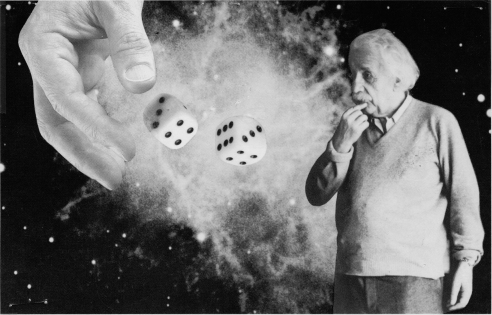
Classical Newtonian physics describes a material world operating according to fixed and immutable laws of cause and effect. Under this picture, our actions are fundamentally predetermined: we can only act one way in any particular situation. Scratch free will.

Quantum physics rescues us from this clockwork universe, but only by injecting randomness into the equation. Randomness is not really free will either, so this escape from determinism does nothing to restore free will.

While they are interesting, I don't really think that either of these observations - the deterministic behaviours apparent on the large scale, or the quarky randomness that emerges at the quantum level - does any violence to the idea of free will.

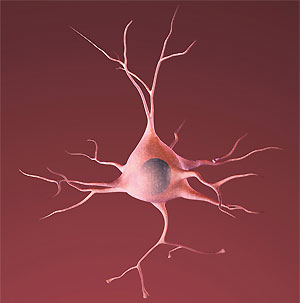
The key thing about free will is not what it looks like from the atom's perspective, nor from the galaxy’s perspective. The key thing is what it looks like from your perspective. It's probably true that your mind is just the sum of the neural activity of your brain cells; and their actions are in turn the sum of the electrical and chemical events happening at a molecular level; and so on down to quarks and leptons and whatnot.

That's interesting. Fascinating, in fact.

But for the question of free will, so what? Free will, as it bears on your actual life, is about being able to put your choices into action. Whatever you think lies behind this "me" - be it atoms and photons or soul and immaterial will - it is still meaningful to talk about "me": what "I" wish, and what "I" do.

As a humanist, I value human life because of properties it has at the human level: consciousness, the capacity to feel pleasure and pain, self-improvement and a desire to understand things. Their value lies not in where they come from, or why they are here, but simply that they are here.

So it is with free will. Its value does not depend on some theory about why we have it; it is valuable because of what it is on the human level. Newtonian clockwork determinism or quantum multiverse randomness are fine for philosophers and physicists. But for me, here and now, there are far more important questions about free will. Do all people have the political freedom to exercise free will? What does a physical addiction mean for free will?

I know it might sound like I'm just defining away the problem of free will. That's philosophy for you. Sometimes it's not a matter of subtle, esoteric reasoning; sometimes it's a matter of identifying the right definition. The right question.

So ask yourself: when it comes to free will, what is important to you – quarks and galaxies or human intentions?

Tuesday, 10 March 2009

"Thank goodness"

A couple of years ago, Daniel Dennett had emergency heart surgery. People asked him how this close call with death had affected his non-religious outlook. His response was an excellent consciousness-raiser. Here's an excerpt:
Yes, I did have an epiphany. I saw with greater clarity than ever before in my life that when I say "Thank goodness!" this is not merely a euphemism for "Thank God!" (We atheists don't believe that there is any God to thank.) I really do mean thank goodness! There is a lot of goodness in this world, and more goodness every day, and this fantastic human-made fabric of excellence is genuinely responsible for the fact that I am alive today. It is a worthy recipient of the gratitude I feel today, and I want to celebrate that fact here and now.
Saying "Thank God!" as an expression of genuine relief is not always backed by an actual religious sentiment, any more than a reflexive "bless you" after someone sneezes is an attempt to prevent demons from entering through your open mouth. So many people may be thinking, "So what? Does it really matter which word I use?"

But Dennett's reflections made me think. What we say - even if we only mean it in the most formulaic, casual sense - can convey ideas that we do not intend. And it can fail to point our gratitude in the right direction.

In the weeks after I read Dennett's article, I made a conscious effort to use "thank goodness", an expression which reflects my actual beliefs better. It wasn't long before it became completely natural to use that rather than the less appropriate "thank God". It's still a little less natural than the other version, but I kind of like that. It means that, every time I say "thank goodness", I am made every-so-slightly conscious of what term I'm using, and why.

What do you think? Do you try, like me, to keep your speech representative of your beliefs? Are you a non-theist but happy to use phrases like "thank God" and "bless you", since they've basically been leached of their original meanings anyway?

Or, if you are a believer in a god, what do you think of this whole matter?

Tuesday, 3 March 2009

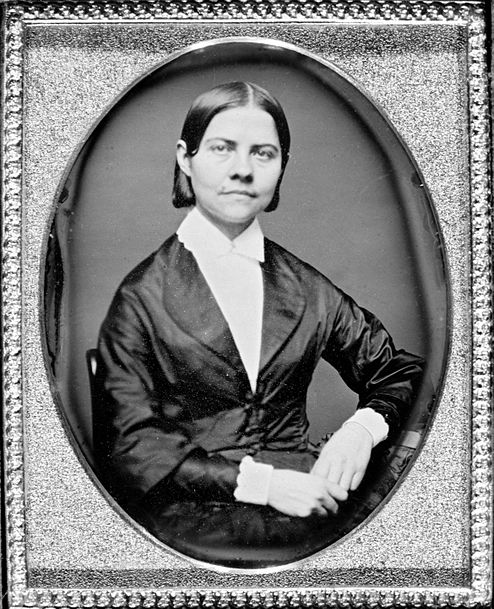
Lucy Stone

Among the blogs I follow is one by a Unitarian: Free and Responsible Search. Last week, Doug posted a story that he related at the Valentine's Day service in his church, that really nails why I love the UUs. Here's a teaser:

When Lucy Stone was a little girl, she decided that she was never, ever, ever going to get married.

She had a pretty good reason for making that decision, because she was living back in the 1800s. And in those days, when a man and a woman got married, the man became the boss. It said so right in the law. So if a woman owned some property, well, when she got married it wasn't her property any more; it was her husband's property. And if she had a job and made a little money – it wasn't her money, it was her husband's money. Because he was the boss.

Lucy didn't want to have a boss, so one day she announced to her mother that she was never, ever, ever going to get married. And her mother said something that parents say a lot. I know I heard it from my parents and maybe you've heard it from yours. Her mother said: "When you get older, you'll change your mind."
Read the rest to learn why I wouldn't mind at all if Kaia were to grow up among this particular religious community.

Monday, 2 March 2009

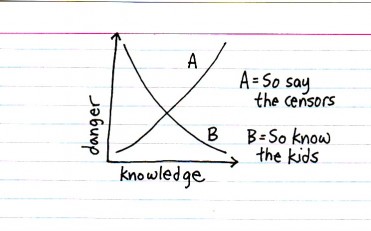
Open knowledge

Have you heard of Jessica Hagy's index cards? You should have.

They're all good, but this recent post seemed worth highlighting:

Tuesday, 24 February 2009

Godless Morality - first glance

A while ago, I read Richard Holloway's excellent book, Godless Morality. I hope in time to address it in more depth. It is, very boldly, an argument that even without setting aside their god-belief, people who believe in a god can benefit from developing a moral system that does not depend on that god's commands or instructions.

This is a valuable argument to make, not just as a personal philosophical exercise, but also as a window on how we can all - believers in all different religious ideas as well as non-believers - construct and build on common ground in our efforts to live harmoniously alongside one another.

Until I can get to a more thorough review, let me share with you what I think is basically the core of the book - a quote from the first chapter ("Ethical Jazz"): (p31 - emphasis added)
Today, authority has to earn respect by the intrinsic value of what it says, not by the force of its imposition. There is a loss in this situation, of course, because power transitions are always dangerously unstable periods in human history, but there is unlikely to be a wholesale return to the past and its values unless we are overtaken by a mass religious movement that obliterates the radically plural nature of contemporary society. Barring that unlikely eventuality, we must do what we can to construct moral agreements that will have the authority of our reason and the discipline of our consent.

Wednesday, 18 February 2009

The high point

Yesterday was a real milestone for me - a culmination of five years of thinking and working and writing and rethinking and reworking and rewriting. To have it declared worthy of the honour of a PhD degree was probably the most satisfying moment of my academic career so far.

But I think the high point of the day was later. After the three hours of the viva, after an afternoon of congratulations from friends and colleagues, after an evening in the pub recounting the events of the day and sharing stories with fellow students and academics.

The high point came when I was home again, and I was putting Kaia to bed, and she fell asleep on my chest.

Ahh, perspective.

Tuesday, 17 February 2009

Liberty and blasphemy

Over at Daylight Atheism, Ebonmuse has a piece on freedom of speech as it relates to blasphemy, a topic of some current import. Here are a couple of key excerpts:
It happened at the U.N., where a bloc of Islamic nations successfully pushed through a resolution demanding "respect" for shariah law, with the shocking result that things like child marriage or the stoning of women can no longer be discussed by the U.N. Human Rights Council.
And:
If free speech is circumscribed by the "right" of religious groups to be protected from offense, then it is an empty and meaningless freedom. Any religious sect can stifle any speech, just by taking offense at what is said. We as a species can never make moral progress if those laws shelter evil superstitions from the light of scrutiny and let them fester in the shadows.
I agree. Restricting freedom of speech because it offends someone - for whatever reason - is unjustifiable.*

To demonstrate this in the most obvious way possible, let me list some of the things that offend my ethical sensibilities as a humanist**:
  1. Suggesting that eternal torture is a fair return for the honest expression of empirically-justified doubt.
  2. Denying the best answers that unbiased scientific inquiry can give us about our place in the universe, in order to promote the unevidenced guesses of misogynistic iron-age patriarchs.
  3. Suggesting that non-belief in supernatural (un-natural) entities is correlated with unethical behaviour.
  4. Implying (through discriminatory laws) that it is more important for my marriage that my spouse and I have certain bits between our legs than that we commit to each other in love.
  5. And of course, I am deeply offended by the suggestion that it is better to stifle free speech than to let religions be confronted with dissenting ideas.
So, by the logic of the people pushing the anti-blasphemy laws, if blasphemy against the religion of another is illegal, it should also be illegal to (1) promote the common religious idea of eternal damnation for nonbelievers, (2) promote ID as a valid scientific competitor to evolution as an explanation for the development of life, (3) cite scriptures (there are many) denouncing nonbelievers as corrupt, (4) exclude same-sex couples from marriage, and (5) promote, pass, or enforce anti-blasphemy laws.

Now, of course, I don't claim the right to not be offended. So if anyone out there thinks there is any validity to having laws specifically prohibiting blasphemous speech, you can come right on over here and ...

... engage in a reasoned and open discussion of the issue, trying to persuade one another of the validity of our positions in a mutual desire to find the best solution. That is how civilized people respond when they are offended.


* Before anyone calls me out for being inconsistent, let me say that my support for Caroline Petrie's suspension was not based on my being offended, but on her misuse of a position of power.

** And let me be clear: in this context, humanist sensibilities must be given equal weight to religious sensibilities, or we are left with intolerable religious discrimination.

Tuesday, 3 February 2009

Golden heresy

From a poem by George Russell that I encountered as a hymn at the local Unitarian church, I offer this delicious and profound verse:
No blazoned banner we unfold—
One charge alone we give to youth,
Against the sceptred myth to hold
The golden heresy of truth.
What better legacy could we carry forward, from ancient skeptics and enlightenment humanists, through us, and on to our children: the golden heresy of truth.

Thursday, 11 December 2008

Confessions of a Recovering Meat Eater

Humanitie, the quarterly publication of the Humanist Society of Scotland, is out now. In it is my second column, included below. Visit the Not Quite So Friendly Humanist for the twin column. (Confession: I cadged my title from his. It was too good not to.)

I'm a vegetarian. I don't eat meat because I don't want to cause the deaths of sentient beings. I cannot justify killing them (or paying someone else to kill them) just for my pleasure or convenience. It is a decision based on deeply-held values, and one I try to stick to despite frequent temptations. It is also, I think, a natural consequence of humanist philosophy - indeed, an essay by humanist philosopher A.C. Grayling was the catalyst for my shift to vegetarianism this past February.*

Having grown up omnivorous, it has been difficult to become vegetarian. Despite the strong rational and compassionate argument for vegetarianism, the habits and tastes of thirty years cannot easily be set aside. I miss the taste of meat: steaks, fish suppers, roast beef sandwiches. It is against this non-rational urging that my ethical decision always fights. I am happy to say that my daughter will not have that struggle: deciding between a vegetarian or an omnivorous diet, she will not be distracted by the irrational influence of habit and custom.

I've had a wide range of reactions since becoming vegetarian: indifference, curiosity, even encouragement and support. Mostly indifference, though. It's no more an issue to most people than declaring a taste for Thai food. But for some people, my vegetarianism is not so easy to accept.

For example, my parents have told me that, by calling my choice an "ethical" one, I imply that their choice is an unethical one. Not only that, my dad raises beef cattle - so my choice also implicitly condemns his work.

I want to be clear: I do not condemn people who choose to include meat in their diet. Eating meat does not mean they are less ethical. Am I being hypocritical, holding myself to one standard and others to a different one?

No. Humanist ethics need not polarize the world of choice into right and wrong, good and bad. Human understanding is imperfect and provisional; this inherent humility of humanism means that I do not set up every personal choice as absolute and universal.

We are a somewhat smarter type of ape, using our ape senses and our ape reasoning to construct meaning and purpose in a confusing and ambiguous world. This ambiguity requires us to be flexible and accommodating of the various ways that people infuse the world with value.

I encourage everyone to think about our kinship with other animals. Consider carefully whether the value of their lives is so small as to be outweighed by the comfort of our habits, or by the slightly greater convenience of constructing an adequate diet with meat.

Think about it, and try to be true to your convictions. Whatever they are. That's all I ask.

* "Speciesism", from The Meaning of Things

Wednesday, 21 May 2008

Followup on abortion

Regarding my last post on abortion, I would like to point out one response and two posts on a related current event in the UK.

As linked from the comments in my post, Christian blogger Ken Brown takes me to task for some incautious use of figures from the internet. (I stand by most of my post, but he is right that the 75% figure doesn't seem to have a firm empirical justification.) I have submitted a detailed response to his criticism on his blog , but it has not (yet) appeared in the comments section.

Second, the recent vote on the Human Embryo and Fertilization Bill in the House of Commons (UK) has attracted the attention of two friends of mine.

Clare points out the dangers lurking behind the proposal to reduce the legal limit for abortions from 24 weeks gestation to 20 weeks. This action would serve to undermine important abortion rights. I should have linked her post before the vote to help get the word out, but in the end the proposed reduction was voted down anyway.

On the other side, Cath has given her perspective on why this decision, and the approval for 'saviour siblings', are inhumane. Her perspective, like that of Ken Brown, is religious, but of course that does not invalidate it. Please note: in Cath's post, when she uses the term lawful, I think she is referring to an absolute moral law rather than human law. Otherwise saying that "their [legislators'] decision is not lawful" would be self-contradictory.

I think that Cath is assuming full human rights for any embryo - presumably from the moment of conception - an assumption that (as I pointed out in my last post) is neither necessary nor universal. Interestingly, Clare's non-religious arguments for abortion rights do not depend on a rejection of that assumption.

Like Clare and Cath, I do not have time to get into a full-blown debate on this issue right now. Also, I hope to focus a little more on the positive and inspiring. Some of my recent posts have perhaps tended toward the combative, and I would like to redress the balance. My blogging notebook has several dozen ideas gestating in it - I look forward to nurturing them into fully-grown posts. Just as soon as the PhD is out of the way. Stay tuned.

Monday, 12 May 2008

On dialogue, genocide, and plague

I would like to apologize for the long gap in posts. I am currently near the end of writing up my PhD dissertation, and almost all of my time and energy is going into that. Below is a post I composed almost a month ago, but didn't get around to tidying up until today. When the PhD is finished, I hope to get back to semi-regular, semi-frequent posting. See you then.

Early last month, the University of Calgary tried (not for the first time) to prevent a student group from holding a display about abortion. Fortunately, they failed - the group held their display, unmolested by campus security. The attempt to thwart them got the group more attention and more sympathy than they would otherwise have received.

Why all the fuss? Why not just let them do their thing? Well, it wasn't simply an anti-abortion display. The group, Campus Pro-Life, was presenting the Genocide Awareness Project, a sensationalist affair, based on the claim that abortion rates in the developed world (25% in Canada) amount to a genocide. Vivid photographs of both aborted fetuses and genocide victims feature prominently. Despite its unsavory tone, and despite the way this analogy ignores the many glaring and important differences between abortion and the intentional extermination of an entire culture (reductio ad hitlerum, anyone?), it is clear to me that trying to ban them from campus is contrary to the spirit of open discussion of ideas that universities are founded on.

I felt drawn to this incident as one where I could support a group's right to put out there message, while disagreeing with the content of that message on almost every level. (I've done so before.) So I contacted them and spent a pleasant hour over lunch chatting with member Matthew Wilson, a very thoughtful and friendly guy. I am grateful to him for helping me refine (and, in some spots, correct) the following contemplations.

At the root of the abortion debate seems to be a fundamental disagreement over the basis of human rights.

To me, human rights derive from those properties of human existence that we most value: consciousness, sentience, free will. It is because we share these properties to some extent with other animals that I recently became and remain a vegetarian. It is because the early stages of a human embryo do not share these properties that I do not see abortion as a kind of murder.

To anti-abortionists, the start of the new human organism at conception is the point where human rights are imbued, by definition. Although many people hold this position for religious reasons, it is neither the case that all religious people are anti-abortion nor that all anti-abortionists rely on religious arguments. (Whatever his feelings, Matthew did not give me one religious argument in the hour we dug through this issue.)

After an hour's careful and enthusiastic discussion with Matthew, I have to conclude that these two positions are simply irreconcilable - each is based on axioms that are fairly impervious to persuasion.

But just because I disagree doesn't mean I can't try to put myself in their shoes, see what it's like. If I accept their axioms rather than mine, then abortion would indeed amount to murder. Let's even accept, for argument's sake, that this justifies calling an abortion rate of 25% "genocide".

What else follows from the belief that every fertilized human egg is ethically equivalent to a human baby? Well, just as not all deaths outside the womb are due to murder - the vast majority are natural, accidental, or from disease - so not all prenatal deaths are due to abortion. In fact, the vast majority of these are also from "natural" causes - called either miscarriage and stillbirth, depending on whether the fetus dies before or after 20 weeks gestation.

The stillbirth rate is very low (around 0.6% in Canada), but miscarriage is another matter. About 10-20% of pregnancies that the mother knows about miscarry. In studies that use detailed detection techniques, about 30% of clinically-recognized pregnancies end in miscarriage. (In this case, "clinically-recognized" means "exhibiting the hormone produced on uterine implantation of the embryo".) Extrapolating to those fertilized eggs that never get implanted and so are currently impossible to medically detect, 75% of conceptions may fail to carry to term.

So three quarters of conceived (and thus fully-human, by the anti-abortionists' lights) embryos miscarry - die without anyone setting out to kill them. And of those that survive this natural winnowing, 25% are then aborted intentionally (about 6% of total conceptions).

The vast majority of pre-birth deaths are miscarriages - twelve times as many as are aborted. If abortion is genocide, miscarriage is a plague unparalleled in human history, claiming 75% of all human lives.

So if Matthew and his colleagues are indeed pro-life, and not simply anti-abortion, what obligation does this knowledge place on them? Isn't miscarriage a more immediate and profound problem than the relatively minuscule one of abortion?

Thanks to Matthew, I have firsthand examples of the responses that anti-abortionists might make to this challenge.

Acknowledgment. To his credit, Matthew acknowledged that the miscarriage statistics, which were new to him, did represent a grave human tragedy from his perspective. (To my discredit, I had originally expected any anti-abortionist to try to wiggle out of such an acknowledgment. Thankyou, Matthew, for proving me wrong.)

Ignorance. I can't deny that the statistics on miscarriage are colossally under-reported. Perhaps people fail to protest this epidemic of miscarriage simply because they're not aware of it. But ignorance is always a shaky excuse. It is particularly so in this case, where a significant minority of women in the anti-abortion movement are bound to have had miscarriages themselves, and so come face-to-face with this reality. I understand that one way in which doctors seek to console parents who suffer a miscarriage is to let them know how common it is - there is nothing wrong with them in particular. Do those who become aware of the problem have no obligation to share it with others whose worldview would motivate them to help fix it?

Intentionality. The strongest reason why anti-abortionists might not choose to act on the miscarriage crisis, despite its scope and import, is the fundamental ethical difference between abortion and miscarriage. One is a conscious act on the part of humans; the other is not. Abortion would be ended if doctors and women simply chose en masse not to do it; miscarriage will not be solved so easily (if a solution is even possible). And given the limited resources of the anti-abortion movement, it is clear where they should focus their efforts first.

(It is interesting to consider, however, that no conception occurs entirely without the participation of human choice. If you know that the consequences of unprotected sex are 3 times as likely to lead to a death as to a life, what responsibility do you bear for the deaths of any embryos your actions generate?)

On balance, I don't feel that these responses are quite adequate to justify the deafening silence from anti-abortionists (particularly those who use terms like "genocide") on the problem of miscarriage. It is simply too big a problem, when I try to look from their perspective, to simply ignore. Action may be expensive, but words are not. It would cost little to mention this problem, and it may serve to spur more people to act for the millions of unborn humans who (from the perspective of the anti-abortionists) die unnecessarily every year.

It is for this reason that I avoid calling their movement "pro-life". Such a positive label would require at least consistency of approach. Until that is exhibited, I can only recognise that they are anti-abortion.


But, like I mentioned above, our positions seem to boil down to a simply irreconcilable conflict of basic assumptions. So I hope Matthew and other anti-abortionists will correct any mistakes in my assumptions and reasoning. But this gulf makes me pose an even deeper and (for me) more troubling question - one that Matthew and I tried but failed to answer in a satisfactory manner. When people in a liberal democracy disagree so much that any state of affairs will be intolerably unethical to someone, how can we come to a decision about a direction to take as a society?