Showing posts with label inspiration. Show all posts

Sunday, 29 November 2009

Miscellaneous

Several things have come through my blog reader that I want to comment on, but none require a post of their own. So here you are:

Celebrating Darwin. Still? Again? It doesn't really matter. Here's a well-produced video giving the history of life in brief, narrated by David Attenborough. Delightful to watch.


(Thanks to Mike, the Not Quite So Friendly Humanist, for sharing this video.)

Solar System on one page. Also along the lines of enjoying the natural world. Or, in this case, worlds: a webpage where you can see all the planets (plus Pluto). They are to scale for size, but also for mean distance from the Sun. Try it out.

If you're having difficulty finding the planets in all the black, here's a little trick: after the "/" at the end of the URL, add "#mars", or "#neptune", and it'll zoom to that planet. But that does kind of defeat the purpose: you're supposed to become aware of the vast, vast spaces between the planets.

(Thanks to Phil, the Bad Astronomer, for the link.)

Abolish the Canadian monarch? Here's Canadian humanist and activist Justin Trottier with his take on the fact that the nominal Canadian head of state is not Canadian, and is also the head of one particular religious sect. I tend to agree with him - there is no good reason to retain the monarchy, though perhaps not yet sufficient reason against it to go to the trouble of writing them out of our laws.

Beautiful impermanence. I close this grab-bag with a delightful "sermon" from Daylight Atheism, in which we are encouraged to reflect upon impermanence as autumn surrounds us*. He contrasts the humanist acceptance of our impermanence with the inborn yearning we all have - reflected so frequently in religious beliefs - to deny our own deaths. While I'm not generally interested in contrasting humanism with religious beliefs, I think the contrast here is poignant. Particularly as the humanist position, in following the evidence of the world around us, draws us away from our primitive desires for immortality. It encourages us, in a real sense, to grow up.

Okay, this one could have used its own post. For now, I refer you to this pair of posts (in that order) by Dale McGowan, about discussing mortality with his kids. And this more recent one, about the problem of awesome people being mortal too.

[Edit to add link to the Daylight Atheism post, which I unaccountably forgot to do at first.]
-----

* Excluding Canada and other northern regions, where winter has already firmly displaced fall, and the whole southern hemisphere, being on the other side of the seasonal see-saw.

Thursday, 26 November 2009

Hero

I would like to introduce you to a hero of mine. His name is Robert Lang.

Robert Lang folds paper. He folds paper into birds. He folds paper into insects. He folds paper into insanely complex and improbably forms.

And that is enough to earn him my admiration (as an amateur folder myself).

But what really rockets him into the ranks of hero is his polymath tendencies. What he has done with his origami outside the traditional world of paper folding.

He has developed mathematical models of origami. His scientific approach has advanced the art to the point that most of the new forms created today would have been impossible half a century ago. But more than that, he has consulted on scientific and engineering projects, bringing the art of folding into space telescopes, car safety, and other areas.

He has given a TED talk; he has been featured in National Geographic.

Robert Lang inspires me. Not only is he an excellent origami artist - something I aspire to in a vague and occasional way. He has also managed to combine various interests of his into a unified and revolutionary whole - something I yearn for in an definite, persistent way.

As someone with a variety of disparate interests (experimental phonetics, computer programming, writing, parenting, humanist spirituality), I would love to bring some of them together, so that I am not always forced to choose to spend time on one at the expense of others.

So much for why I admire Robert Lang. But what does it mean for someone to be a hero?

Robert Lang has at least two attributes that make him a hero for me: he does something I would like to be able to do myself, and he inspires me to actually try to achieve it.

Unicorn familyIt's not necessarily origami - as I said, origami is an interest of mine, but not necessarily a passion. (Though I do have Lang's book, Origami Design Secrets, from which I hope to learn how to design my own origami figures.) I don't mean to emulate him completely. But he inspires me to try my own brand of originality, my own synthesis of disparate interests. For the moment, it's an attempt to bring my programming interest into my academic phonetic research. I also have a project on the go bringing programming and humanist spirituality together (stay tuned).

Related to this, being my hero does not mean Lang seems infallible, or even super-human, to me. Of course he is just another person. But that's part of the inspiration: there is no great divide between the kind of person I am and the kind of person he is. I can do amazing things, just like he does.

I suppose that I might more accurately call Lang a role-model. But that has a slightly antiseptic ring to me. A role model sounds like someone your parents expose you to in an attempt to influence you.

A hero - that's someone you choose for yourself.

Photo credits:

Portrait of Lang with life-sized origami people from Lang's website.

Image of origami unicorns by Timothy Mills. Models folded by me, from a design in Origami Step by Step, by Robert Hardin, who credits it to Patricia Crawford.

Monday, 28 September 2009

Meditation on the origin of life

In the Cosmic Calendar, the Origin of Life falls somewhere around now.* About three and a half billion years ago, the great abundance of life on Earth began, probably with a single replicating molecule - a precursor to DNA. Every living organism today, from the tiniest bacterium to the largest whale, descends in an unbroken line from that tiny bundle of atoms.

Today, I invite you to consider this:

We still reproduce as single-celled organisms.

Every act of human reproduction involves one cell from each parent. A single cell. For all our wondrous complexity, our bountiful organs and tissues, our towering intellects and tender thoughts ... for all that, we still have to humble ourselves to the level of our distant, millions-of-generations-past ancestors in order to participate in that most ancient, most definitive act of life: reproduction.**

Footnotes:

* In fact, the details of this event, including its exact date, are difficult to pin down. The Wikipedia article on abiogenesis gives possible dates ranging from 4.2 billion years ago (bya) to 2.4 bya - that is, 11 September to 29 October. However, today falls somewhere in the middle of the range, just over 3.5 bya. The fact that 28 September is also my daughter's birthday makes me even more prone to contemplating life's origins today.

** Not all multi-cellular organisms are so constrained. Many plants do a significant part of their reproduction by sending out shoots or otherwise cloning themselves, rather than going through the whole one-cell business. Who's superior now, eh?

Friday, 11 September 2009

Five influential female authors

Here's an internet/blogging meme coming via Ken at C. Orthodoxy. It asks us, as the post title says, to name five female authors that have been influential to us.

As the father of a precocious almost-two-year-old girl, I make sure to celebrate female excellence as much as possible in order to counterbalance the undeniable tendency, here and now, for there to be more men than women in prominent positions - politically, socially, economically, and culturally.

So here goes: five awesome writers who happen to be women.*

Ursula K. Le Guin. Every book of hers that I've read has moved, delighted, and surprised me. She wrote The Dispossessed, the best argument for an egalitarian, property-free, anarchist society that I've come across (it's a novel). She wrote the Earthsea books, easily equal to Lord of the Rings or the Harry Potter series (both of which I love) for epic awesomeness and tender humanness. She wrote an excellent version of Lao Tzu's Tao Te Ching. (Here's one of the verses from it, which I quoted from here.) There are more, but I think I'll let you discover them for yourself. Le Guin's influence has been to show me that bold ideas don't preclude humble values like compassion and human vulnerability. Most of the science fiction I read growing up (and there was a lot - I was that kind of kid) was written by men from a particular era. At the risk of sounding sexist, it shows. Action, adventure, sex, but not much quiet humanity. Le Guin taught me that, even in genres like science fiction and fantasy, even when your characters include hermaphroditic psychics living on a planet of snow and ice or powerful wizards who can command the elements with arcane words, there is space for a fully human narrative. (There are male authors who I would rank close to her in this regard, but none quite as good at it, and anyway this post isn't about them.)

Gloria Borden and Katherine Harris. I'm listing these two together, because they are co-authors (along with Lawrence Raphael) of the Speech Science Primer**, my first textbook in phonetics - the physical science of speech. I am now at the end of a PhD in phonetics, with a dissertation approved and bound (nice thick tome) that adds a little to the sum of human knowledge. Although the main credit for my education goes to all the in-person teachers I've had (several of whom were women), I have to acknowledge that this well-presented and understandable textbook gave me a level of understanding and confidence in the field that helped cement my choice, leading me into an exciting field of scientific discovery.

Marjorie Tew. We humanists pride ourselves on following the evidence. We make a big deal of the fact that modern medicine is generally evidence-based (as opposed to most types of alternative "medicine", which are either evidence-free or based on very fallible types of evidence, such as anecdote). Tew, a statistician, followed a line of evidence in a surprising direction, and relates the story and the evidence in her book Safer Childbirth? (the question mark is in the title). In it, she presents a compelling empirical case that, in modern industrialised nations, giving birth in a hospital is not safer than giving birth at home. (For anyone interested, I related some key details of her arguments a couple of years ago in this thread at the Bad Science forums.) Her book was a large part of what persuaded Deena and me to plan a homebirth with Kaia. We are planning the same for baby #2 (due in a few short weeks). Again, there were other influences, but Tew's approach and her arguments were an important factor in our decision.

Julia Sweeney (and here). Okay, so this may be stretching the definition of "author" a bit. I know Julie Sweeney through the audio version of two of her monologues: In the Family Way, and Letting Go of God. They are basically books, just in a different medium. Sort of. Anyway, it's my blog, so I can choose whoever I want. Julia Sweeney's main influence on me is through the religious monologue, Letting Go of God. In it, she recounts her journey from being a contented Catholic, through reading the Bible, encountering doubt, wrestling with it, trying out different ideas, and eventually coming out a contented atheist. It's a fun listen. It's also valuable because whenever she elicits laughs, they are primarily directed at her - or at ideas she entertained, or thoughts she had. Not at other people, not in a sneering "I'm better than you" way.

It is, I think, the gentlest way I have ever encountered for someone to outline why she doesn't believe in God. Let someone laugh with you, at you, and you cease to be a threatening figure, an enemy. You become simply human, and it's much easier to try to sympathise with someone who's simply human than someone who is speaking as a scientist, or as a philosopher (or, perhaps, as a blogger). Goodness knows I have nothing like Julia Sweeney's talent for humour, but whenever I think about engaging a religious believer in discussion about topics we differ on, I think of Julia Sweeney and her approach. I think she has helped me become a more friendly humanist.

So there you have it. Five women whose writing (or similar creative output) has influenced me. One author of fiction, three scientists, and a performer/autobiographer.

The five women I've talked about above have influenced me, but their influence pales next to that of the women I know and have known in person - family, friends, colleagues, teachers.

Also, though I celebrate these women and their influence on me, I do it because of what they have done, not just because they are women. I hope that, as she grows up, Kaia will find inspiration and perhaps role-models in women like these, but also in men who write influential, inspiring, interesting, or great things. Or even humble things that nevertheless make our world better.

* I couldn't find photos for all five, so I've decided to leave this post image-free. You can see some of them by following the links provided.

** I'm linking to Amazon's listing of the 3rd edition of the Speech Science Primer, which is the one I used. There are more recent editions that you should look at if you are considering buying the book: speech science is a dynamic field, and some of what they had to say in 1994 is out of date now.

Friday, 14 August 2009

Radiolab

I just want to thank Dale McGowan for pointing me to the Radiolab podcast.

Deena and I are slowly working our way through the archived episodes - this is the most acoustically delicious learning experience I can remember having. I recommend it to anyone with a mote of curiosity about stuff in general.

So far we've learned about randomness, race, sperm, the placebo effect, zoos, mortality, and time; and we've also been treated to a fascinating investigation of the 1938 "War of the Worlds" panic.

Friday, 31 July 2009

Signs

Don't speak. Just watch it.


What do you think?

Thanks, Ken.

Tuesday, 16 June 2009

Natural consolations

Over at Daylight Atheism, Ebonmuse has shared yet another of his symphonically beautiful bits of writing. This one is in honour of his grandmother, who recently died. He calls it "Green Fields". Check it out. Here's a taster:

For those who are grieving, for those who mourn, and for all those who are burdened with the weary weight of sorrow, I have a prescription.

Find a quiet, peaceful place, a green field of grass where great trees grow and gift the world with their shade. Let it be just before sunset, at that golden hour when the heat of the afternoon is past, when the sky is blue as a pearl and the setting sun hues the world in its last, richest and most transitory light.

Sit against the trunk of an old and massive tree, one that's lived through summers and winters untold. Lean on its rough, moss-clad bark and feel the slow, patient pulse of the life in the green heart of the wood. Try to clear your mind of thought, and listen.

(Read the rest at Daylight Atheism.)

Photo credit:

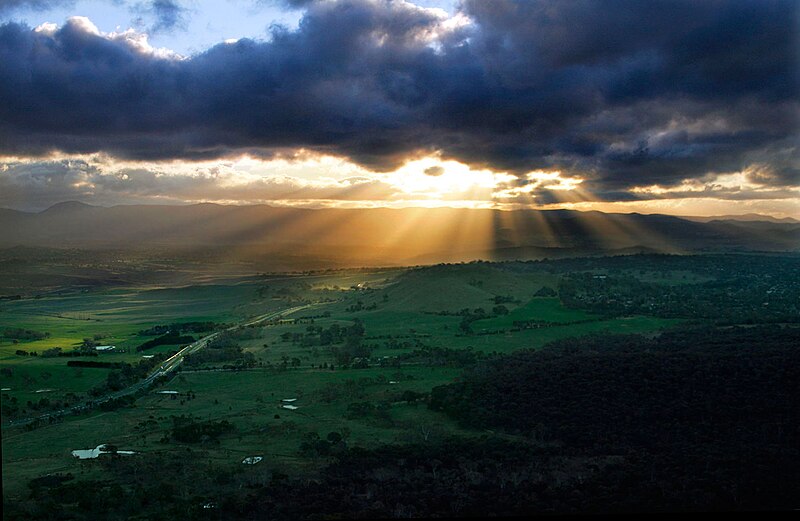
Crepuscular ray sunset from Telstra tower, by Fir0002/Flagstaffotos. Released under the GNU Free Documentation License (GFDL).

Tuesday, 26 May 2009

Greater than ourselves

How many times has someone has asked you, as a non-believer (whatever it happens to be that you don't believe in), "Don't you believe in anything greater than yourself?" For me, the question most often comes up when I declare a naturalistic worldview. No god? No afterlife? Then what do you look to for hope and inspiration?

Today, I'm just going to offer a couple of items on one source of inspiration and hope from something greater than myself: the cosmos.

Even as a simple empirical matter, there are worlds beyond count, many grander than our own in their different ways. The image to the right is one example - click on it, enlarge it, try to get your head around the vast grandeur of everything that lies outside our little planetary cocoon (a cocoon that is itself much vaster and more beautiful than anything I or any human can claim credit for).

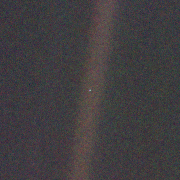
Or try this simple image. Some of you will recognize it. Some will know the phrase often associated with it: the Pale Blue Dot.

This is the last image of Earth taken by the Voyager probe, as it passed Saturn on its journey out of the Solar System.

Do I believe in anything greater than myself? Yes. In my boldest moments, I try to go beyond simply accepting the facts of astronomy as told in numbers. I try to take into the very centre of my self the understanding given by astronomers and scientists. To grasp the enormity of everything that exists, and to accept my humble place in this reality.

It is a difficult task for my limited, pragmatic ape brain. But I have the help of some great poet-scientists of yesterday and today. Here's one of them, Carl Sagan - the man we can thank for the Pale Blue Dot image - contemplating its meaning for us who live on that dot:


Photo credits:

Scale of the stars - source unknown. Link given by a member of the Friendly Atheist forum.

Pale Blue Dot - public domain, created by NASA. Via Wikimedia.

Thursday, 21 May 2009

Support at the speed of light

If you're ever feeling down and in need of an uplifting thought, try this science-inspired contemplation. It occurred to me yesterday as I was seeking consolation after a rather acute disappointment.


The Earth's gravity pulls on us to the tune of almost 10 m/s/s. In other words, if it were unopposed, every second it would accelerate us downwards 10 metres per second faster. But fortunately, we have a very supportive ground to keep us up. Remember Newton's third law of motion? Every action has an equal and opposite reaction. So that 10 m/s/s downward pull is counteracted by a 10 m/s/s supportive force holding us up.*

Now, imagine we had that 10 m/s/s support out in space, where there was no gravity to counteract it. How fast would you go?

Well, the speed of light is just shy of 300 million metres per second, so after 30 million seconds, one gravity of acceleration would get you to the speed of light.

And how long is 30 million seconds, you ask?

Just shy of a year: 353 days.

Think about that. Every year, the ground under you supports you with enough force to get you to the speed of light.

----------------

* For the pedants in my audience, yes, I know that force and acceleration are two different things. But for the purpose of this contemplation, the differences are immaterial, and to pedantically point them out would distract from the point of the contemplation.

Photo credits:
Earth photo from the Great Expectations blog, probably public domain.

Millennium Falcon cockpit at light speed from the Common Defense blog, almost certainly copyright Lucasfilm, fair use.

Tuesday, 5 May 2009

Dangerous lunatic cyclist ... wow!

I commute by bicycle to work here in Edinburgh. It's an okay city for cycling. One of my biggest peeves is other cyclists who ignore the traffic rules, encouraging motorists to think that all cyclists are dangerous lunatics.

Well, Erich at Dangerous Intersection has just introduced me to a dangerous lunatic cyclist in this fair city whose antics are simply inspiring. Take a look:


(But notice that he's wearing a helmet.)

Postscript: I queued this post up several days in advance. Since then, the video has become quite well-known, and been picked up by media outlets that get more circulation than this blog. So apologies if this is old news to you.

Tuesday, 7 April 2009

Spirituality of the Rainbow

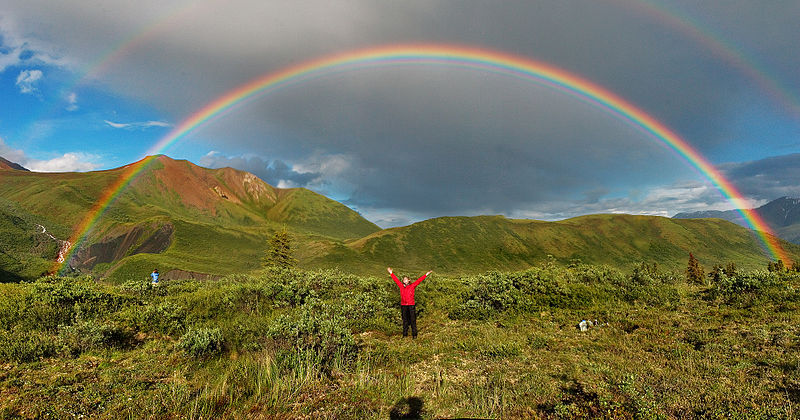
A rainbow is a beautiful sight.

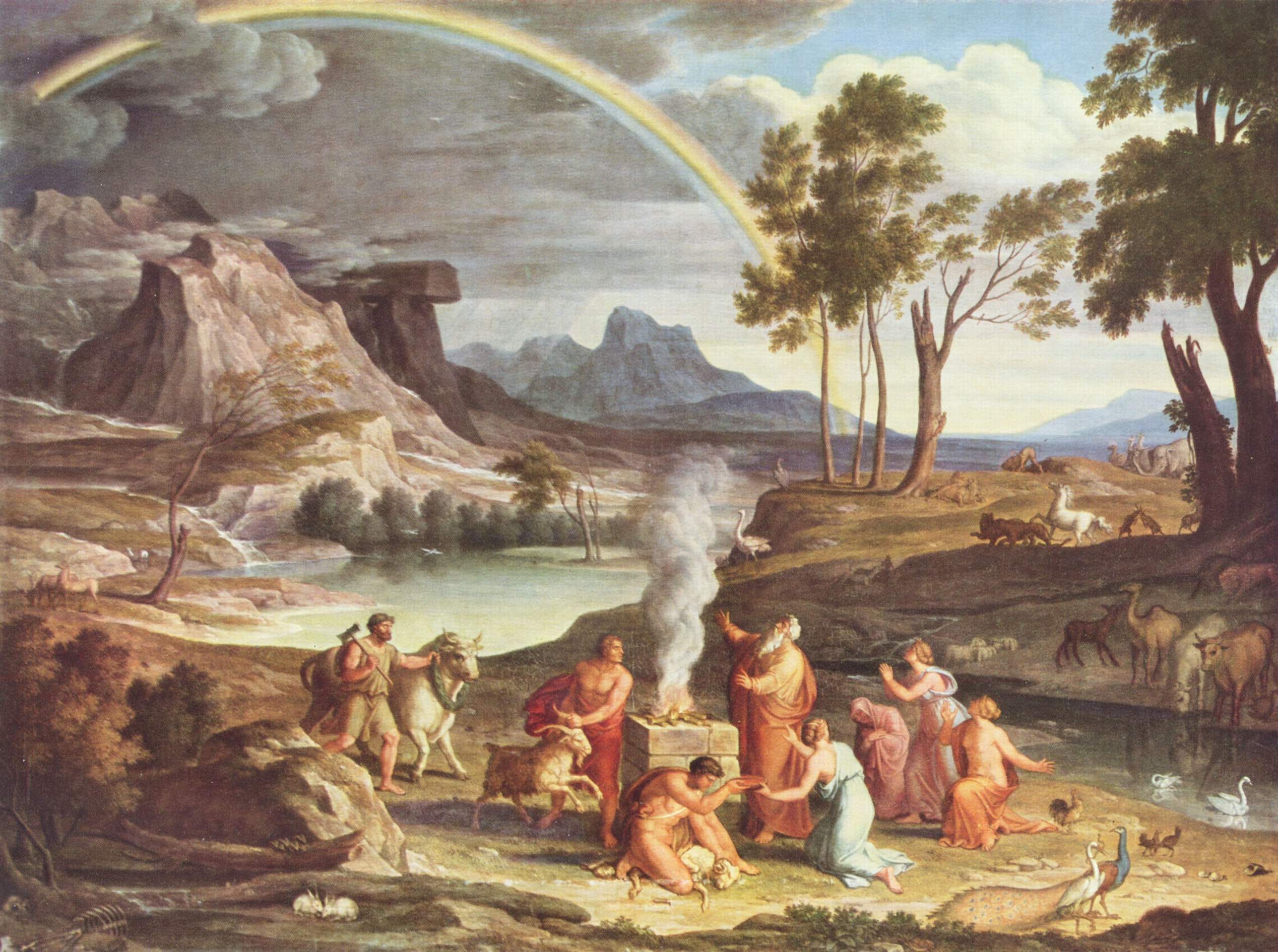
Rainbows have inspired people for ages, spawning many myths and poems.

There are those who think that knowledge of how a rainbow works somehow destroys that beauty. Here are some lines from Keats' poem, "Lamia", lamenting Newton's insights into optics that let us see inside the workings of the rainbow:
Do not all charms fly
At the mere touch of cold philosophy?
There was an awful rainbow once in heaven:
We know her woof, her texture; she is given
In the dull catalogue of common things.
Philosophy will clip an Angel’s wings,
Conquer all mysteries by rule and line,
Empty the haunted air, and gnomed mine—-
Unweave a rainbow, as it erewhile made
The tender-person’d Lamia melt into a shade.
I can almost understand his sorrow - mystery is beautiful, and when knowledge expands, mystery seems to retreat.

But what a narrow view of the world, to think that more knowledge, more understanding, somehow robs the world of its mystery and its beauty. Let me relate a personal account.

It begins with a book, whose name is taken from the passage above. In Unweaving the Rainbow, Richard Dawkins shows not only the glory and delight of discovery that lies at the root of scientific pursuits. He gives us a glimpse of the deeper beauty revealed by those pursuits.

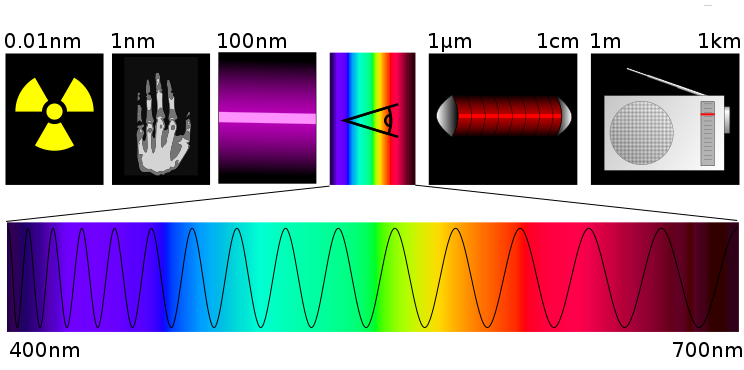
He reminds us (for example) that Newton's work on optics has been carried on. We now know that visible light - spanning the colours of the rainbow - is but a tiny slice of a great continuum. The electromagnetic spectrum extends off the red end of the rainbow into infrared and radio waves. Off the other end, we get ultraviolet, x-ray, and gamma waves.

The rainbow we see is only a fragment - the tiny slice of that greater spectrum, visible to our pragmatically-evolved eyes.

I was on a train, some weeks after reading Dawkins' thoughts. Looking out the window, I saw a rainbow, gliding along the nearby hills, keeping pace with us. It was soft and faint, as beautiful as the first rainbow I ever saw as a child.

But this time there was something more. As I stared at it, I thought of it not simply as a strip of colours, but as something greater and deeper - the full spectrum of light. Of course, I still didn't see those other colours. Knowledge had not altered my eyes at all. But it was as if I could almost feel them.

Like when you hear a loved one walk up behind you. All that you physically sense is the sound. But you know what they look like, how they walk, how they stand. How tall they are. How likely they are to tickle you if they get close enough. With the sound of their steps and their breathing, your mind calls up all of this knowledge, filling in the experience for you so that you can almost see the person behind you, almost feel their movements and expressions.

In just that way, I felt the invisible rainbow filling the sky outside my train - down to the centre of the arc and out as far as the sky went. It was magnificent. Such glory; such encompassing beauty.

Beauty that I would never have known if the rainbow had not been "unwoven".

Thankyou, Richard Dawkins, for helping me to see this. Thankyou to every scientist who gives us the chance to see the unseen, hear the unheard, touch the untouchable.

We are, and forever will be, surrounded by a sea of mystery. What delight to be able to reach into it, to see the wondrous glory that is only accessible by the tools of science - Keats' "cold philosophy". Cold? The thought of all the knowledge, all the enrichment of subjective experience that science can give us, warms my very being.

I wish I could show Keats the rainbow I now see, thanks to scientists like Newton. But I'll have to content myself by sharing it with you. May you feel the same exhilaration I feel at the sight of every rainbow!


Photo credits:

The rainbow images are from the Wikipedia article on rainbows. The first is public domain; the second is licenced under an Attribution ShareAlike Creative Commons licence by its creator, Eric Rolph.

The spectrum illustration is from the Wikipedia article on the electromagnetic spectrum. It is licenced under an Attribution ShareAlike Creative Commons licence by its creator, Tatoute.

Tuesday, 3 March 2009

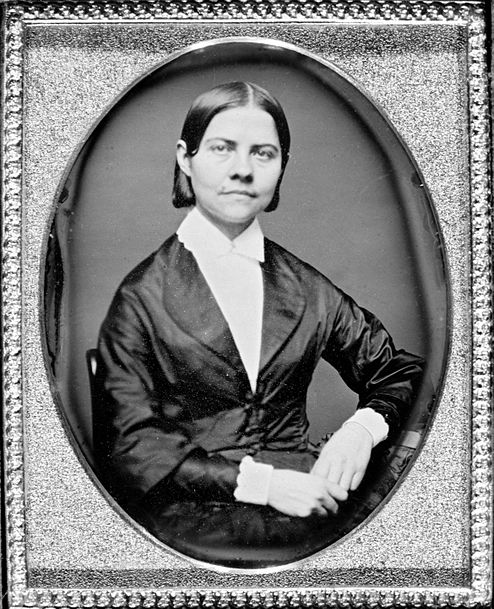
Lucy Stone

Among the blogs I follow is one by a Unitarian: Free and Responsible Search. Last week, Doug posted a story that he related at the Valentine's Day service in his church, that really nails why I love the UUs. Here's a teaser:

When Lucy Stone was a little girl, she decided that she was never, ever, ever going to get married.

She had a pretty good reason for making that decision, because she was living back in the 1800s. And in those days, when a man and a woman got married, the man became the boss. It said so right in the law. So if a woman owned some property, well, when she got married it wasn't her property any more; it was her husband's property. And if she had a job and made a little money – it wasn't her money, it was her husband's money. Because he was the boss.

Lucy didn't want to have a boss, so one day she announced to her mother that she was never, ever, ever going to get married. And her mother said something that parents say a lot. I know I heard it from my parents and maybe you've heard it from yours. Her mother said: "When you get older, you'll change your mind."
Read the rest to learn why I wouldn't mind at all if Kaia were to grow up among this particular religious community.

Tuesday, 13 January 2009

Primo Levi - quote

From Primo Levi's afterword to the combined volume of If This is a Man and The Truce, which relate the author's experiences as a prisoner at Auschwitz and on his journey home.
It is, therefore, necessary to be suspicious of those who seek to convince us with means other than reason, and of charismatic leaders; we must be cautious about delegating to others our judgment and our will. Since it is difficult to distinguish true prophets from false, it is as well to regard all prophets with suspicion. It is better to renounce revealed truths, even if they exalt us by their splendor or if we find them convenient because we can acquire them gratis. It is better to content oneself with other more modest and less exciting truths, those one acquires painfully, little by little and without shortcuts, with study, discussion, and reasoning, those that can be verified and demonstrated.

Monday, 22 September 2008

I am ...

The fall equinox occurs today at 15:44. As the sun sits in balance, straight above the equator, I give you a post about balance, about thinking of the other side. About including others with you and including yourself with others.

Derek at Disonanz Cognitif has a post that just begs to become a blog meme. (Thanks to Mike Clawson at Friendly Atheist for pointing me to Derek's post.) Here are three of his "I am" statements (go read his blog for the rest):
I live in a world of people, animals, places, things, ideas, time, space, matter, energy, forces, galaxies, quasars, mesons, and bosons. I live in a universe that seems self-sustaining and acts a whole lot like there's no God in it. I am an Atheist.

I believe I have not yet sufficiently investigated the myriad of religious, spiritual experiences others claim to have had, and that there are too many well-educated, intelligent people who claim religious belief without a hint of shame, to discount the existence of an otherworld completely. I am an Agnostic.

I believe the teachings of Christ regarding positive social change and mercy to the oppressed are just a bit too clear a message of the gospel to be swept up as a minor sub-plot to securing an eternal country club membership for oneself. I am a Christian.
Derek explicitly avoids labelling himself in general (at the end of his post, he says "I am a person who has made a conscious choice to make no overt profession of faith or disbelief"), so it's quite a bold thing for him to make such a list as this. If you read through the comments on the Friendly Atheist post, you can see that some people don't even try to take the statements in the spirit they're intended. It seems obvious to me that Derek is trying to point out bridges. Some commenters just want to nitpick and try to impose their own definitions of terms on Derek.

Going through his list, I could echo "me too" to every one of his declarations. More importantly, I think this is a great way to crack through some of the divisive oppositions in our society, if people can bother to listen.

And I think I could add a couple of entries to the list myself. Here goes ...

---

I delight in solving puzzles and probing mysteries. I love to discover things which can be discovered and to know things which can be known. I am determined to learn about the reality that lies beyond my subjective, biased human perceptions. I am a scientist.

I savour the taste of a good, unsolved mystery. I enjoy the potential that lies in the unknown. I could lie for hours looking up at the sky, contemplating the fact that I will never know most of what there is to be known in the universe. I am a mystic.

I refuse to let people's reproductive anatomy dictate how I treat them, except when I expect to interact directly with their reproductive anatomy. I resist sexist behaviour in myself and in others. I am a feminist.

I value the lives of all sentient animals, and cause them as little suffering as possible. I enjoy a variety of foods, but do my best to eat things whose production does not involve the deaths of feeling beings. I am a vegetarian.

I think the best hope for human well-being and betterment lies in treating one another with compassion and reason in this life, the only one we can be sure we have. I value human life above non-human life. I am a humanist.

---

So there it is. I invite you to add your own items, either in the comments here or, of course, on your own blog.

I know that many people will disagree with the connections I'm making between characteristics and labels. But remember, this is an exercise in seeking connections. There may be an element of exaggeration in some or all of the items, but there is also an element of truth. It is that truth, that seed of inclusiveness, of universality, that is (in my mind) the point of the whole exercise.

I think I'll close this post as Derek closes his, with a line of hope and openness.

"And yet, the spiritual journey continues."

Monday, 25 August 2008

Myers on meaning

At the end of a post about convergent evolution (and its misinterpretations), P.Z. Myers, author of the Pharyngula blog, gives these thoughts about meaning and purpose:
We are each our own individual engines of purpose, operating in a hostile universe where randomness can shape our fates. There is no grand scheme behind our existence, other than the same function that all our ancestors had: to order our local environment to allow each to survive and to make the world a little better for our progeny. And that's enough — that's all that is needed to make a rich, diverse, living planet, and it's all I need to live a satisfying life.
What a heartfelt summary of meaning in a naturalistic worldview. Thankyou, P.Z.!

Monday, 7 July 2008

Thiakian king on death, and my response.

Today I give no argument, no news.

An ancient tale inspired a train of thought.
I'll share the thought in pent-iambic verse,
the English form Fitzgerald used to scribe
the ancient epic Odyssey from Greek.

He renders Homer's tale in vivid lines,
a saga of a man who seeks his home.

Odysseus speaks the lines that woke my muse;
recounts to his Phaiakian hosts his woes.
He's sailed from Troy; he's sacked an isle, and left.
Before he left a few of his men were slain.

Odysseus tells what happened then, at sea:

No ship made sail next day until some shipmate
had raised a cry, three times, for each poor ghost
unfleshed by the Kikonês on that field.


That word, unfleshed, is what has stirred my mind.
Belief and hope and fear in that term dwell.
Unfleshed: the self evicted from its corpse,
to travel down the dark Hadean paths.

A multitude expects such fate on death:
the unfleshed ghost, the soul, will carry on
to heaven, hell, or maybe back to Earth.

The word "unfleshed" befits these cherished thoughts,
expresses what so many hope from death.

But what of folk like me, who don't expect
to live on past our physical demise?
What word have we expressing what befalls?

The snowflake melts: its shape, unique, is lost.
Just so the mind, which body must sustain,
when body fails, is gone, has ceased, that's it.
How fleeting, fright'ning, this idea of self:
ephemeral and fragile. Here, then not.

The snowflake's stuff, of course, will still remain,
will rise, form clouds, and then will fall again.
Just so, my starstuff matter carries on.
In plants, in rocks, in future human flesh
it feeds the life of Gaia, though I'm gone.

I do not know a cure for fear of death:
I dread the tolling bells that speak my end.
But facts are not beholden to my wish.
Instead, to truth's stark beauty do I bend.

Does all this pose a word that I can use?
A word that speaks of loss and beauty cold?
Odysseus says the soul becomes unfleshed.
For me, the flesh, the life, becomes unsouled.


(Please let me know if verse-based blogging works.
These lines, did they enlighten or confuse?
Plain prose is still the medium I prefer.
Should ever I again invoke the Muse?)

Monday, 30 June 2008

My home and native land

Tomorrow, July first, is Canada Day. It commemorates Confederation in 1867, the key step toward our independence from Britain. I'm here in Alberta, still writing up my PhD (almost done!), and I thought I'd take a few minutes to share with you what I love about this land I call home.

I grew up on an Alberta farm. The landscape of my youth contains gently rolling prairies dotted with native woods, and the wall of the Rocky Mountains standing guard on the western horizon.

Photos will never give you the full sense of a place that is at once complete and unfinished, a sense that I got early this spring, looking out over the soft browns of the grassland, dotted with pale, naked deciduous trees, dark spruce, and dirty-white patches of snow. For that, you would need to come stand beside me at the edge of the farmyard here, looking out over those fields. Breathe deep of the crisp, dusty air; squint against the brilliant sun and the vast, pale blue sky. Taste the calm anticipation of spring, the heady vibrancy of summer, the hot explosion of fall, or the sharp, dry tang of winter. Listen to the quiet, vibrant present, humming with the birds of the season and the distant activity of humans. Feel the steady is and the eager will be of the world commingling in this place.

See the sharp peaks of the Rockies on the western horizon. Go visit them. Stand surrounded by these majestic Titans, waiting eternally by the standards of a human life. They have grown an inch, a millimetre, a micrometre at a time, age after age, until the sea floor became the land's ambassador to the sky. Let yourself be thoroughly daunted by the realization of their vast, patient ascent, their venerable serenity. Some are almost as old as life itself; others are young, rising in the late Cretaceous (after the first mammals evolved).

I wish I could share with you just what I love about this land that is in turns both humble and arrogant, noble and common (much like its human tenants). But I cannot. At the root of my connection to Alberta, behind every phrase I use to try to evoke its essence in your mind, is that impossible-to-communicate longing called "home". If the central Alberta prairie is your home, you already know what I mean and my words are a pale substitute for our shared understanding. If it is not, I can only hope to show you fragments and moments of what this place is to me.

Perhaps that is enough.

Come and visit. Not necessarily me, or my family's farm (though you're welcome, of course). Come visit the land. Let me know what it says to you.

Happy Canada Day.

Thursday, 5 June 2008

A beautiful picture from Mars

What do you think: is this the most beautiful picture you have ever seen?


Well, why don't you go see what Phil Plait, the coolest and most engaging science blogger I've come across, has to say about the deceptively simple image:


Here are a couple of links to another blog that talks about this awe-inducing image (including a picture that tells even more).

I simply can't compete with Phil's description, so I'll leave you with his words:

Think on this, and think on it carefully: you are seeing a manmade object falling gracefully and with intent to the surface of an alien world, as seen by another manmade object already circling that world, both of them acting robotically, and both of them hundreds of million of kilometers away.

Never, ever forget: we did this. This is what we can do.

Thursday, 10 April 2008

Sceptical comfort

Greta Christina just posted a delightful entry on her blog.
I know that religion is repeatedly defended as a source of comfort in difficult times. But this has been one of the more difficult times in my life... and I've been finding that my atheistic, skeptical, rational view of my difficulties is more comforting than any religious belief I've ever held, or could ever imagine holding.
I know that her post is unlikely to persuade anyone to change their own worldview, but perhaps the reasons she gives will help thoughtful religious people to understand why Humanists and other atheists do not suffer from the nihilism that seems to often be expected of them.

It has certainly given me a couple of new ideas for thoughtful, positive responses next time I'm asked about the whole "how do you get through life" thing.

Wednesday, 19 March 2008

Arthur C Clarke

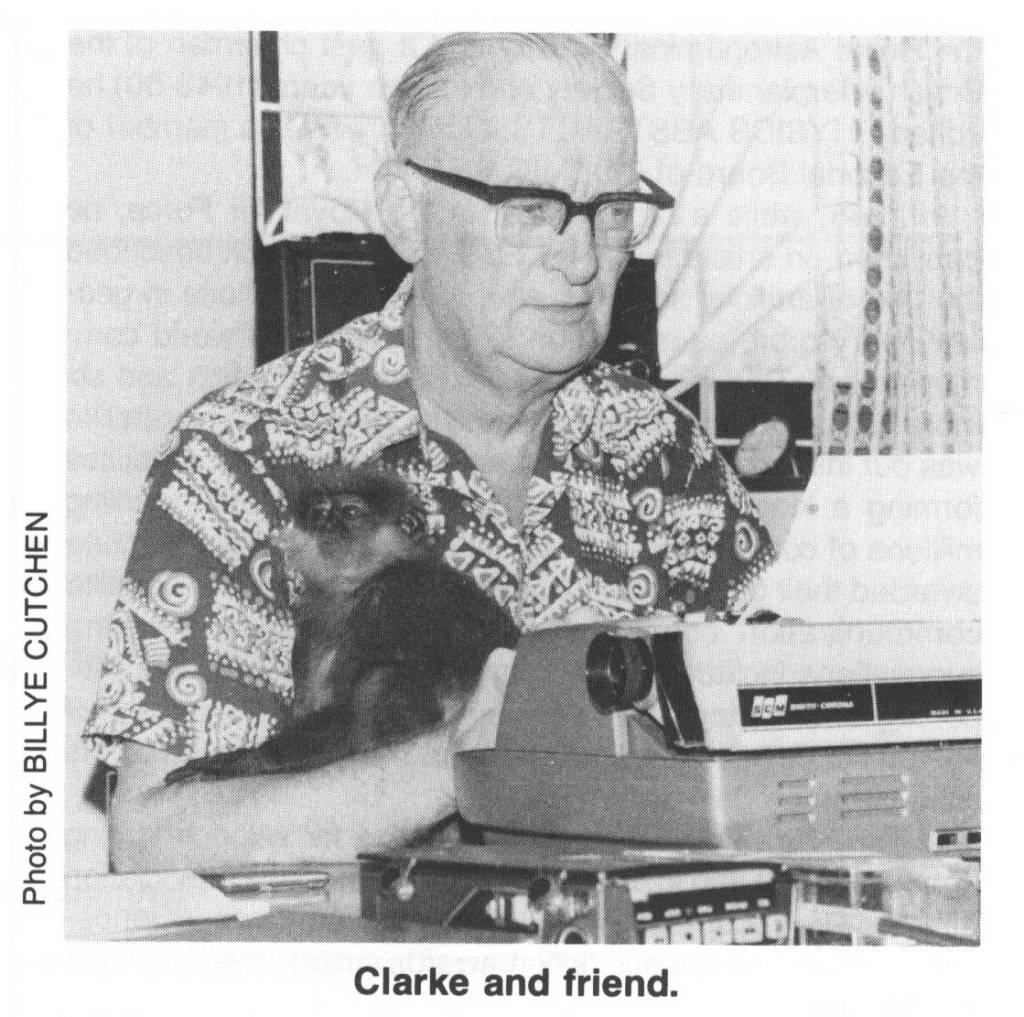
I heard it from Phil at Bad Astronomy: Arthur C Clarke has died.

One of that great and noble class, the science fiction writers, Clarke was one of my dear companions growing up as a somewhat introverted youth in a small rural community. Not only did the writing of these people - Robert Heinlein, Isaac Asimov, Arthur C Clarke, Orson Scott Card, Ursula Le Guin, and others - give my quirky imagination exciting places to play; they showed me how truly exciting science is, and the reality it exposes.

I am sure I would not be a scientist today without their work. It's conceivable I wouldn't be a Humanist either. Science fiction, with its very personal, human blend of hope, science, imagination, and human narrative, seems to be a quintessentially Humanist endeavour. (Check out this list of SF writers' religious affiliations as evidence.)

I could go on at length, but instead I'll leave you with time to spend reading something of his. Check out the bibliography on his Wikipedia page; read something there that you haven't before (or, if you've read them all, re-read your favorite). Learn about his foundation.

May we all carry on his wake, continuing to realize the dreams he shared with us and always dreaming new ones to draw us into a better and brighter future.